

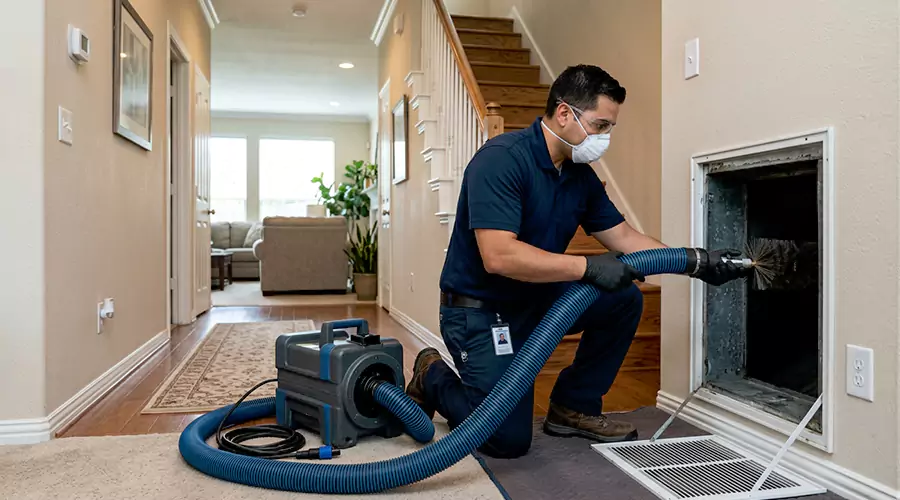
After professional air duct deep cleaning, the cleaned duct interiors and included HVAC components should be visibly free of significant dust and debris, all registers and access panels should be securely restored, and the heating and cooling system should operate normally. You should also receive an explanation of the completed work and any problems discovered during the service.
Air duct cleaning removes accumulated material from the heating and cooling distribution network using specialized collection and agitation equipment. A properly performed service focuses on removing contamination without releasing it into the living space or damaging the ducts.
Homeowners often expect immediate changes in dust levels, odors, airflow, and energy bills. However, the results depend on the condition of the system before cleaning. Understanding what can reasonably change helps homeowners assess the work without expecting benefits that cleaning cannot reliably provide.
What Should Your Air Ducts Look Like After Cleaning?
The Environmental Protection Agency (EPA) recommends a visual inspection to determine whether cleaning was completed properly. Accessible duct interiors should be free of visible debris. The cleaning company may use photographs or inspection cameras to show the results.
A clean duct may still have normal discoloration, seams, or surface marks. These conditions should not automatically be confused with remaining dirt. The important distinction is whether accumulated material was removed from the components included in the agreed service.
| Component | What to Check After Cleaning |
|---|---|
| Supply ducts | No significant visible loose debris |
| Return ducts | Deposits removed from accessible interior surfaces |
| Registers and grilles | Clean and securely reattached |
| Supply and return plenums | No significant remaining deposits |
| Blower compartment | Clean if included in the service |
| Cooling coil and drain pan | Properly cleaned if included |
| Service openings | Securely closed and sealed |
| Duct insulation | No new tears or visible damage |
| HVAC system | Normal heating and cooling operation |
The contractor should clarify which components were included before the final inspection. A cleaning package limited to duct passages should not be described as complete mechanical equipment servicing.
Should Your Home Have Less Dust After Duct Cleaning?
Some homeowners may notice less debris coming from registers when the ducts previously contained substantial loose deposits. However, routine air duct cleaning has not been shown to consistently reduce household airborne dust levels.
The EPA explains that indoor dust originates from several sources, including outdoor particles, cooking, household activities, pets, and furnishings. Much of the material inside ducts may also remain attached to surfaces rather than continuously entering rooms. A clean duct network is therefore not a guarantee of a dust-free home. Regular household cleaning and appropriate HVAC filtration remain important after the appointment.
Will Indoor Air Quality Improve Immediately?
A reduction in documented duct contamination can be a useful result of professional cleaning. However, scientific evidence does not establish consistent improvements in indoor air quality or health from routine residential duct cleaning.
The results depend on the original problem and whether other sources of pollution remain. Cleaning cannot correct poor ventilation, persistent moisture, or pollutants originating elsewhere in the home. Homeowners should be cautious about companies promising immediate relief from allergies or respiratory conditions. Such health outcomes should not be guaranteed as a result of duct cleaning.
Will Airflow Improve After Cleaning?
Airflow may improve when a duct was substantially obstructed by accumulated material and that obstruction was removed. Cleaning dirty blower components or cooling coils may also help when contamination was interfering with their operation.
However, ordinary surface dust usually does not create a significant airflow restriction. Weak airflow may instead result from undersized ducts, disconnected branches, a clogged filter, or equipment problems. If airflow remains poor after cleaning, request an HVAC inspection rather than another cleaning service. A qualified technician can evaluate the blower, duct connections, and system static pressure.
Should You Expect Any Dust During or After Cleaning?
Professional cleaning should use controlled debris collection to limit particles escaping into occupied rooms. NADCA describes using negative-pressure vacuum equipment together with agitation tools to loosen and capture contaminants.
A small amount of ordinary household dust may remain on surrounding surfaces, but visible clouds of debris coming from registers are not an expected sign of proper cleaning. Heavy new dust deposits should be reported promptly. Check that equipment has been removed carefully and that registers have been reinstalled. A technician should explain any unusual condition rather than dismiss it as a normal consequence of cleaning.
Is It Normal to Notice an Odor After Air Duct Cleaning?
Ordinary mechanical cleaning should not leave a strong chemical smell when no chemical products were used. If you notice an unfamiliar odor, ask the contractor what materials were applied and whether the HVAC system has been inspected for moisture or contamination.
Some contractors offer deodorizing or antimicrobial treatments. These should not be assumed necessary as part of routine cleaning. The EPA recommends understanding the benefits, risks, and applicable product instructions before approving chemical applications. Persistent musty odors can indicate unresolved moisture problems. Cleaning alone cannot prevent contamination from returning when the water source remains active.
What Should You Inspect Before the Technicians Leave?
The EPA provides a post-cleaning consumer checklist covering duct interiors, equipment components, service openings, and system operation. Reviewing the completed work while the crew is present makes it easier to address any problems.
Before accepting the service:
- Ask to inspect representative supply and return ducts.
- Review before-and-after photographs where available.
- Confirm that registers and grilles are clean.
- Check that covers are securely reattached.
- Verify that temporary access openings are properly closed.
- Confirm the agreed HVAC components were cleaned.
- Ask whether any damaged ducts were discovered.
- Check that the system operates normally.
Access openings should be mechanically secured and sealed appropriately, not simply covered with loose tape. Any insulation disturbed during cleaning should be restored.
Should You Replace the HVAC Filter After Cleaning?
Check the filter's condition and follow the equipment manufacturer's maintenance instructions. If it is dirty or due for replacement, installing a suitable new filter after cleaning can help maintain the system.
The filter must fit its designated housing correctly. Gaps around the filter can allow particles to bypass the media and enter the equipment. A higher-efficiency filter should only be selected when compatible with the system's airflow requirements. Filter replacement is not a substitute for repairing duct leakage or correcting moisture problems. These issues should be addressed independently.
How Can You Keep Ducts Cleaner After the Service?
Maintaining a clean system involves reducing opportunities for dust, water, and pests to enter. The EPA recommends appropriate filtration, routine HVAC maintenance, and moisture prevention.
Useful practices include keeping return grilles clear, replacing filters when needed, correcting plumbing or roof leaks, and protecting duct openings during dusty renovations. If technicians discovered damaged duct connections, arrange appropriate repairs. Return-side leaks can draw air from unfinished areas and contribute to recurring deposits.
How Soon Will You Need Another Air Duct Cleaning?
The EPA does not recommend cleaning residential air ducts on a fixed schedule. Another cleaning should be based on the system's condition rather than the date of the last service.
Periodic inspection and normal HVAC maintenance can help identify unusual contamination. A home with no significant deposits may not require another cleaning for several years. If contamination returns quickly, investigate the source. Repeated cleaning without correcting pest entry, moisture, or filter bypass is unlikely to provide a lasting solution.
Conclusion
After professional air duct cleaning, the agreed components should be visibly clean, properly reassembled, and operating normally. A final inspection should confirm that registers are secure and service openings are sealed. Some homes may benefit from removing substantial contamination, but reductions in allergies, household dust, or energy bills are not guaranteed. Continue regular filter maintenance and correct any moisture or duct damage identified during the service.